

Looking after your fryer
By Shaune Hall, development chef for Falcon Foodservice Equipment
Summary
Looking after your fryer is straightforward and makes lots of sense: it saves you money and will improve the quality of your fried produce, building your reputation. Don’t be lazy and let your care regime drop – it will hurt your bottom line and your reputation.
Fryers are part of virtually every professional kitchen around the world – a million chefs use them every single day – but I’m constantly amazed at how little many of them know about good fryer care.
Looking after your fryer – and the oil in it – is key to keeping your cooking operations efficient and also to looking after your customers. If you don’t look after your fryer and your oil, then you will receive complaints because your oil will be affecting the taste of the food you prepare in it.
In this blog, I’ll outline the basic processes you should follow to keep your fryer clean, efficient and producing the best quality food.
1/ Only use your fryer when you need it
I have worked in many kitchens over the years, from large, industrial operations to small, Michelin-starred setups. But ALL of them have something in common: chefs walk in the door and switch on all their appliances – no matter when they are planning to use it.
For equipment like a griddle or solidtop, it can take up to 15 minutes for it to get up to cooking temperature, so I understand the thinking behind getting them heated up early (though still not as early as most chefs turn them on), but the fact is there is NO reason to do this with fryers.
Virtually every fryer on the market today is engineered to heat up quickly – all Falcon models get up to temperature in five minutes.
If you aren’t going to be using your fryer till 11am, DON’T switch it on at 9:30am! Even if you need to use it for some prep – poaching some chips ready for triple cooked chips on your menu, for example – switch it off after you are done and you will still be able to have it ready for service in just minutes.
The reasons for this are twofold: 1/ having the fryer heating only when you need it you will save energy and stop your kitchen heating up too much (a big problem in smaller kitchens especially) and 2/ you will protect your oil.
When oil is heated it begins to change chemically – and the more it is used the more new molecules are formed within it. This changes its taste and can leave you with oil which produces rancid tasting food.
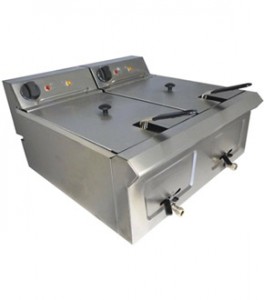
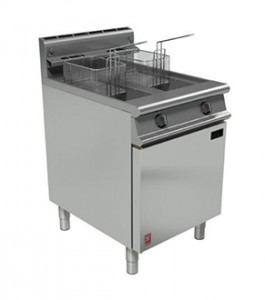
2/ Skim the oil as often as you can
Whenever you use your fryer, the food you cook in it will leave bits behind: bits of batter, breadcrumbs or even chips can get left in the fryer.
If you can (and I know how hectic lunch or dinner service can be) try and skim the oil of any debris immediately. The key is not to let the debris sink to the bottom of the fryer, next to the elements or burners in a gas fryer. This is because this debris will then sit there and slowly darken and, in the case of bread or potato based products, caramelise as the starch they contain breaks down into sugars.
These items do two things: 1/ they change the taste of the oil and, 2/ they make it less efficient at heating and cooking, as they soak up heat energy meant for heating the oil.
This can make a drastic difference to cooking times. Chips that would have taken 4 minutes are taking 6, fish that would have cooked in 3 taking four and a half. This means that you will be producing food more slowly and that will hit your bottom line and your customer satisfaction.
3/ Take time to keep the fryer clean with a quick spruce up
Before you change your oil, I’d advise taking a break between sessions to drain your oil and clean out your fryer with paper towel. This will allow you to clear the debris from the bottom of the machine and freshen up your oil by sieving it.
Although this won’t save really old oil, it will help to keep two-or three day-old oil fresher and reduce the influence of taste build up within the oil itself
4/ Have a regular schedule to change your oil
Whatever you are doing in between oil changes, if you have a busy business I’d recommend changing your oil every five days at least. That, for me, is good housekeeping and will ensure you have oil in the best possible condition.
But don’t take that as gospel – you have to judge when your oil needs changing by its colour – the darker the worse its state. I’d recommend changing it when you start to see a dark tinge to the oil, rather like a weak cup of tea. You should always be able to clearly see the bottom of the fryer.
Conclusion
Here are the main points you need to remember about good fryer care:
1/ Only use your fryer when you need it
2/ Skim the oil as often as you can
3/ Take time to keep the fryer clean with a quick spruce up
4/ Have a regular schedule to change your oil
Learn More
If you are interested in the range of Falcon fryers, have a look at our website. We offer a variety of flexible procurement methods meaning that whatever your situation, and whether you want to rent or buy, we will have something that will suit you. Click on the link below to see our complete range of Falcon fryer products.

 Phil is an experienced journalist, PR man and blogger who is delighted to be working for U-Select as it builds a reputation for value, flexibility and great customer service.
The Power of Branded Commercial Refrigeration: Boosting Impulse Sales and Brand Visibility for F&B Brands
The Power of Branded Commercial Refrigeration: Boosting Impulse Sales and Brand Visibility for F&B Brands In the highly competitive food and beverage (F&B) industry, capturing consumer attention and driving impulse purchases
The Benefits of Energy Efficient Commercial Refrigeration in Convenience Stores
The Benefits of Renting Energy Efficient Commercial Refrigeration in Convenience Stores As the retail landscape evolves, convenience stores are under increasing pressure to optimise their operational costs while maintaining customer satisfaction.
The Energy Shift: Transforming Commercial Refrigeration in Hospitality Operations
The Energy Shift: Transforming Commercial Refrigeration in Hospitality Operations In the fast-paced world of hospitality, operational efficiency and sustainability are crucial for long-term success. Back-of-house operations – specifically commercial refrigeration units – quietly

Rental vs Warranty: Why Catering Equipment Rental Equipment Outperforms Warranty Coverage
Rental vs Warranty: Why Catering Equipment Rental Outperforms Warranty Coverage When it comes to equipping your business with the best in commercial refrigeration and catering equipment, the decision between purchasing with

The Nutritional and Operational Benefits of Combi Ovens for Care Home Kitchens
The Nutritional and Operational Benefits of Combi Ovens for Care Home Kitchens In care home kitchens, the challenge of consistently providing nutritionally balanced, appealing, and efficiently prepared meals is considerable. Combi

Unlock the Benefits of Refrigeration and Catering Equipment as a Service for Your Private School
Unlock the Benefits of Refrigeration and Catering Equipment as a Service for Your Private School Kitchen As a Bursar, Estates Manager, Catering Manager, or Finance Director, you understand the importance of providing the